


BECOMING AMERICAN: A POLITICAL MEMOIR
Cary D. Lowe
Black Rose Press
Memoir
Becoming American is the inspiring story of the author’s
transformation from a child of Holocaust survivors in post-war Europe to
an American lawyer, academic, and activist associated with such famed
political leaders as Robert Kennedy, George McGovern, Jerry Brown, and
Tom Hayden.
Searching for his great-grandparents’ graves in a hidden cemetery
outside Prague makes him recall his experiences of becoming American:
listening to Army Counterintelligence agents gathered at his family home
in Austria; a tense encounter with Russian soldiers during the post-war
occupation; seeing Jim Crow racism in the South during his first visit
to the United States; becoming an American citizen in his teens; having
his citizenship challenged by border guards; fearing for his new country
upon witnessing the Watts riots in Los Angeles; advancing the American
dream as a real estate lawyer, helping develop entire new communities;
and rising to leadership positions in organizations shaping government
policies around some of the most important issues of our time.
Becoming American won the 2020 Discovery Award for best
political writing from an independent publisher. It features a foreword
by bestselling author Edith Eger.
REVIEW4 out of 5Becoming American is an engaging memoir. From a childhood in post-war Europe, to becoming a successful American lawyer, to seeking out his roots, Lowe’s memoir is a story that spans decades and continents. It was fascinating to see how each experience shaped Lowe into who he is today. With no small amount of accomplishments under his belt this book is a chronicle of the inner changes and external influences that Lowe has experienced, the perfect mix for an enjoyable memoir.

Amazon:
https://amzn.to/3njh97y
B&N:
https://bit.ly/2Gi81Qe

CHAPTER
1THE
SEARCH
Growing up in postwar Austria, my
greatest hope was someday to become an American. A real American, like the
khaki-clad soldiers occupying the country or the cowboys in the westerns at the
local cinema. My father, a refugee from Vienna who
worked on the Nuremberg war
crimes tribunal, promised me that hope would be fulfilled one day. What I
didn’t realize then was that becoming American would cut me off from my roots.
Many years later, after my parents and my brother had died, I resolved to
restore that connection.***
On a sunny autumn afternoon in 1997, I arrived
with my nine-year-old daughter at the entrance of a long-closed Jewish cemetery
outside Strakonice, in the countryside south of Prague. Thirty-five years after we had left Europe for America, a search worthy of Indiana Jones had brought me
and Coralea here from our home in Los Angeles. Inside, I hoped to find the graves of my
paternal great-grandparents.Stepping out of the car into a light breeze, I
felt the momentary burst of elation of a marathon runner crossing the finish line.
Then reality interrupted. Pursing my lips, I turned to Coralea.“I just hope this is the right cemetery,” I said.
“Aunt Mimi told me only that it was near Strakonice, but she didn’t seem sure.
It’s been a long time since she was here.”“It has to be the right one,” Coralea responded
with the certainty of youth.Six-foot stucco-encased walls and eight-foot
wrought-iron gates blocked our way. If I could get in, would I find the graves?
How would I read Hebrew inscriptions on the headstones?I felt as nervous as when I stood before a
federal judge to take my oath of United States citizenship at the age of seventeen. I clasped
Coralea’s left hand. She squeezed back. I took a step toward the gates, then
another and another, with her in tow, until the gates loomed over us like
sentinels. An ancient-looking lock the size of my fist secured chains wrapped
around the innermost bars. I searched for a sign with information on how to
gain entry. A musty smell, a combination of rust and fallen leaves, momentarily
caught my attention. Trembling, I reached out with my left hand, grasped the
rough bars, and shook them. I knew I would not be entering through those gates.“We’ve come so far,” I said. “We’ve got to get in
there.” Yet, the graves beyond the gates seemed impossibly out of reach.I thought of the stories of my father’s narrow
escape from Vienna on the eve of World War II, of my mother’s years
in hiding during the war and her harrowing escape, and of their improbable
return to Europe for the Nuremberg trials. I recalled the similarly amazing stories
of survival told by nearly everyone I knew. As my father said, “If they didn’t
have an amazing story, they wouldn’t be here to tell it.”Turning to Coralea, I said, “I wish my parents
could be here with us.”“Especially grandma,” she replied with a sigh.
“She wanted to bring me back here so much.”Closing my eyes, I searched for an answer. My
thoughts rushed back over the unlikely path that had led me to this time and
place.I recalled my childhood in Austria, just a few hours’ drive away. The Iron Curtain
had blocked us off from our roots for years, just as the cemetery walls
threatened to do now. Although the slaughter was over, the guns were silent,
and the armies mostly had gone home, I lived amid the aftermath of the war —
the bombed cities being rebuilt, the Hitlerhaus that cast a cloud over my
hometown, my refugee nanny Herma, displaced persons in squatters’ camps, and
concentration camp survivors piecing their lives back together.I remembered my first interactions with Americans
— the military occupiers, the intelligence agents that gathered at our home
and told wild tales, and my childhood friends in Austria and later in Germany. And the combination of excitement and
apprehension I felt later, realizing I was becoming gradually Americanized. I
marveled at how immigrating and becoming an American citizen had launched me
into a life of political involvement in my adopted country.Most of all, I thought how much those experiences
had changed my life. I had evolved from a German-speaking, Austrian-born child
of war survivors into an English-speaking American, eagerly drawn into a new
and exciting culture. What I experienced and witnessed in the years after the
war had shaped how I viewed the world, how I interacted with people, and how I
identified myself.In becoming Americanized, however, I had lost
much of my connection to those early years and to my family’s places of origin.
They had receded behind the more recent people and places of my American
experience.I opened my eyes, bringing me back to the
present. The gates seemed even more ominous. Still holding my hand, Coralea
looked up at me expectantly. I peered between the bars at the rows of
headstones. The closest ones looked ancient, like those in the old Jewish
cemetery in Prague, with weathered, barely legible Hebrew
lettering. Behind them stood newer markers, taller and more ornate.Weeds
and grass had so overgrown much of the cemetery that I wondered when anyone had
visited last and opened those gates. Whatever I might find inside, I could not
imagine being denied after coming this far. I struggled to figure out our next
step until Coralea interrupted my thoughts.“You
can do it, Dad,” she said. “You found this place. You can find a way in.”


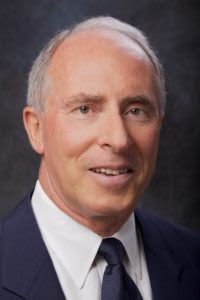
He has published over fifty essays on political and civic issues in
major newspapers, as well as professional reports and articles in
professional journals.
Mr. Lowe is a retired California land use lawyer with 45 years of
experience representing public agencies, developers, Indian tribes, and
non-profit organizations. He holds a law degree and a Ph.D. from the
University of Southern California. He taught courses in law and urban
planning at USC, UCLA, and UC San Diego, and he writes and lectures on
land use and environmental issues. In addition to his legal experience,
Mr. Lowe is a credentialed mediator affiliated with the Land Use &
Environmental Mediation Group of the National Conflict Resolution
Center.

Website: https://carylowewriter.com/
Facebook: https://www.facebook.com/carylowewriter/?modal=admin_todo_tour




⋅•⋅⋅•⋅⊰⋅•⋅⋅•⋅⋅•⋅⋅•⋅∙∘☽༓☾∘∙•⋅⋅⋅•⋅⋅⊰⋅•⋅⋅•⋅⋅•⋅⋅•⋅
We are (slowly) working on updating old posts to the new format and removing old tour/blitz posts that are now missing key assets – please be patient with us, there are a lot of posts to go through, we’ve been doing this since 2016! Any tour/blitz posts that contained a review and are now missing key assets will be updated to review posts so the reviews remain accessible
⋅•⋅⋅•⋅⊰⋅•⋅⋅•⋅⋅•⋅⋅•⋅∙∘☽༓☾∘∙•⋅⋅⋅•⋅⋅⊰⋅•⋅⋅•⋅⋅•⋅⋅•⋅
We’re doing our best to get everything up on the site and social media in a timely manner. Apologies if anything is missed or late! Between the state of the US right now, mental/physical health problems, and some things going on in our personal lives, things may be missed or late occasionally. We truly appreciate your understanding! Feel free to reach out to Lily if you notice something missing.
⋅•⋅⋅•⋅⊰⋅•⋅⋅•⋅⋅•⋅⋅•⋅∙∘☽༓☾∘∙•⋅⋅⋅•⋅⋅⊰⋅•⋅⋅•⋅⋅•⋅⋅•⋅
Mental Health Resources for those in the USA – In light of the recent election, we want to put out a message that LGBTQIA+ and minorities are always welcome here. We may post promos in conjunction with tour companies that spout worldviews we don’t always agree with, but we do our best to avoid any openly phobic posts, and should you notice any, we’d appreciate you contacting us with this form to let us know.

⋅•⋅⋅•⋅⊰⋅•⋅⋅•⋅⋅•⋅⋅•⋅∙∘☽༓☾∘∙•⋅⋅⋅•⋅⋅⊰⋅•⋅⋅•⋅⋅•⋅⋅•⋅